Positioning
Date Published
Last Updated
The memorability trap: why competing in the same sandbox makes your brand impossible to remember
Competing in the same sandbox makes you forgettable. Learn how to escape the memorability trap.
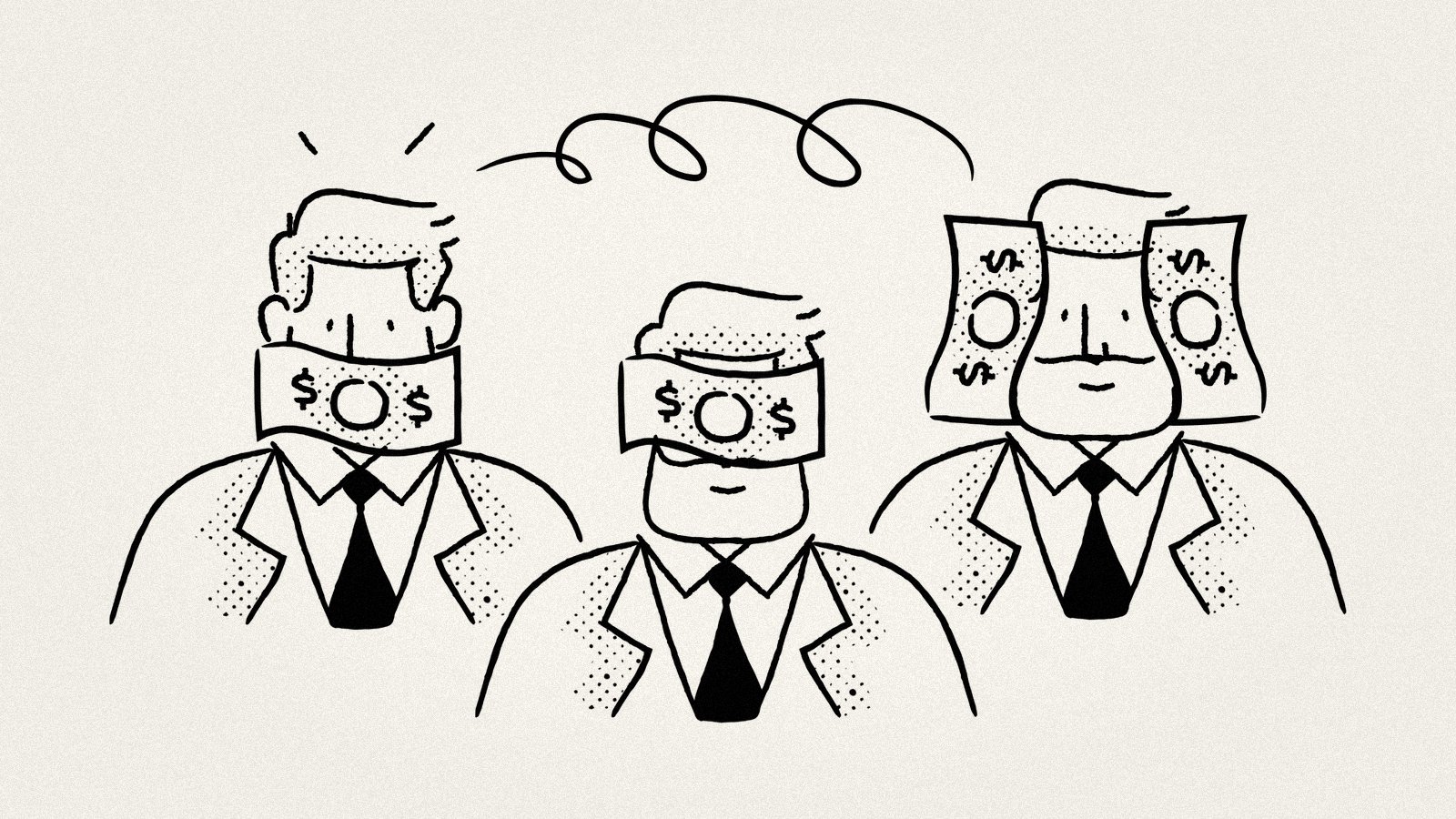
You're standing at your booth at SaaStr Annual. A prospect walks up, glances at your banner, and says: "Oh, you're like [competitor], right?"
You explain the differences. You walk through your unique approach. The prospect nods politely, collects your swag, and moves to the next booth – where they'll hear a nearly identical pitch from a company targeting the same ICP with the same value proposition.
Three weeks later, in a vendor evaluation spreadsheet, both companies appear in the same row with the same checkmarks. The decision comes down to price. As Peep Laja, founder of Wynter, puts it: "If there's no difference, people will choose based on the price. If your product isn't unique, you'll always compete on price."
This is the memorability trap. It's what happens when competing brands crowd the same sandbox – same features, same ICP, same messaging – and discover that the real competition isn't for market share. It's for mental real estate.
What happens in buyers' brains when brands look the same?
When rival companies position identically, something specific happens in buyers' brains. They don't evaluate each option separately. They compress.
Research published in the Journal of Business Research describes consumer memory as a "battling ground where brands compete for recall." The researchers tracked how buyers form mental "citation lists" when making purchase decisions. Their finding: brands that lack distinctiveness don't get separate mental files. They get compressed into category labels (source: Chandon, Laurent, and Lambert-Pandraud, 2022).
For competing companies, this compression is devastating. It means:
Your brand isn't remembered as "Company X with unique value Y"
Your brand is remembered as "one of those tools that does Z"
Specific differentiators vanish from memory within days of buyer encounters
Price becomes the only remaining decision factor
Tomasz Tunguz, venture capitalist at Theory Ventures, explains why this compression starts early: "The first company to reach a prospect frames the buyer's lens for a long time. The features that matter, the price point and pricing model, insufficiencies in competitors' offerings. Each subsequent bidder for the business must either conform to that mental model... or exert enough energy and spend enough money to challenge and subvert the first framing."
And when buyers compress you into "one of those tools that does Z," every campaign has to reintroduce who you are from scratch – which is exactly how CAC quietly inflates in crowded markets. The CAC article shows how this cognitive compression turns into 40–60% higher acquisition costs.
A meta-analysis of 99 studies (N = 7,202) published in the Journal of Consumer Psychology quantified this effect. When buyers face high "choice set complexity" – multiple similar options requiring careful comparison – they don't decide more carefully. They experience "decision paralysis" and abandon the decision entirely (source: Chernev, Böckenholt, and Goodman, 2015).
This is why adding features rarely solves competitive problems. More features means more complexity. More complexity means more cognitive load. More cognitive load means buyers either choose the safest default (the incumbent) or walk away.
What the memorability trap looks like
The memorability trap has specific symptoms. It emerges when:
Multiple business competitors target identical ICPs
Those competitors use interchangeable messaging and proof points
They fight for the same keywords, the same channels, the same conference placements
Buyers encounter multiple competitors in quick succession during evaluation
Byron Sharp, director of the Ehrenberg-Bass Institute and author of How Brands Grow, has studied this dynamic extensively. His research shows that "mental availability" – the probability a buyer thinks of your brand in a buying situation – is the primary mechanism behind brand growth.
Sharp describes the challenge: "Powerful brands have in common that they own a great degree of mindshare in the brain. More people think about them, more often." The corollary is equally important: brands without distinctive mental presence don't grow regardless of their feature set or pricing strategy.
The Ehrenberg-Bass Institute's research on distinctive brand assets reinforces this point. Logos, colors, characters, taglines, and sounds serve as "memory cues" that help buyers notice, recognize, and recall specific brands. Without these cues—or when competitors copy them—brands become cognitively invisible.
How competing brands become forgettable
The Journal of Marketing published a study on "competitive interference effects" that explains the mechanism. Researchers found that when consumers encounter ads for similar brands in quick succession, recall for individual brands drops significantly. Familiar, established brands maintain their memory advantage. Newcomers and lookalike brands get filed as "more of the same" (source: Kent and Allen, 1994).
Here's how it works for a B2B buyer evaluating multiple project management tools:
What Buyers Encounter | Cognitive Effect |
|---|---|
5 tools emphasizing "collaboration" | Compressed into "collaboration tools" category |
Similar pricing tiers ($12–18/user) | Price no longer differentiates |
Similar social proof (Series B, 200+ customers) | Trust signals cancel out |
Similar visual design (clean, minimal, blue) | Visual cues don't trigger brand-specific recall |
Similar feature matrices | Features become table stakes, not differentiators |
The brain doesn't create five separate memory traces. It creates one: "project management tools." The individual brands blur. The only distinctions that survive are surface-level details – logo color, exact price, sales rep personality.
This is why so many competitive brands find themselves in the same frustrating cycle: invest heavily in demand generation, watch CAC climb, wonder why qualified leads don't convert, and blame sales execution for what is actually a positioning problem.
Competitive brands examples: escaping the trap
Some brands have recognized this trap and deliberately escaped it. Consider three business competitors examples:
Slack: Creating a new mental category
When Slack launched in 2013, the messaging tool market was crowded – HipChat, Campfire, Yammer, and others competed for the same enterprise communication budget.
Slack didn't try to win the "messaging tool" sandbox. It created a new one.
Stewart Butterfield, Slack's co-founder, articulated the strategy clearly: "We're not trying to replace email. We're trying to change the way people work." This wasn't positioning. It was category creation.
By framing Slack as the "operating system for work" rather than another communication tool, Butterfield created distinct mental real estate. When Microsoft launched Teams in 2017 with superior integration and zero marginal cost for Office 365 customers, Slack's mental positioning protected it. Teams was "Microsoft's messaging product." Slack was something different.
Tesla: Technology company competing against cars
Tesla's competitive advantage isn't batteries or range. It's mental categorization.
Elon Musk has consistently positioned Tesla as a technology and energy company, not an automotive manufacturer. Retail in mall showrooms mirrors Apple, not Ford dealerships. Over-the-air software updates position vehicles as "phones on wheels." The company doesn't talk about horsepower; it talks about sustainable energy and autonomy.
The result: when legacy automakers launched electric vehicles, they entered the "electric car" mental category. Tesla occupied "the future of transportation" – a different sandbox entirely.
Liquid Death: Entertainment brand that sells water
Liquid Death faces the ultimate commoditization challenge: selling water in a market dominated by Evian, Dasani, and Aquafina.
The brand's solution was radical repositioning. Heavy metal aesthetics. "Murder your thirst" messaging. Content that works as entertainment independent of the product.
Liquid Death isn't processed as "another water brand" competing on purity or source location. It's processed as an entertainment brand that happens to sell water. Different sandbox, no direct competitors, distinctive mental real estate.
A cautionary tale: two competing brands, one blur
Consider what's happening right now across B2B SaaS. Two data analytics platforms – anonymized as Company A and Company B – are fighting for the same mid-market segment.
Their positioning is nearly identical:
Positioning Element | Company A | Company B |
|---|---|---|
Target ICP | "Growing data teams" | "Scaling analytics teams" |
Hero message | "Unified analytics platform" | "Integrated data platform" |
Key proof point | "50% faster insights" | "2x faster time-to-insight" |
Trust signals | Series B, 200 customers | Series B, 180 customers |
Primary channels | LinkedIn, intent data, SDR outreach | LinkedIn, intent data, SDR outreach |
Both companies hear the same feedback at conferences: "You look really similar to [competitor]." Win/loss analysis shows neither company's unique strengths appearing in buyer reasoning. Deals close based on price, timing, or sales rep rapport.
Both companies are increasing ad spend. Both are watching CAC climb quarter over quarter. Neither appears distinctive in brand recall surveys – they cluster together with four other "data analytics" vendors as essentially interchangeable. Their paid acquisition metrics look exactly like the patterns described in Why Head‑to‑Head Competition Is Bleeding Your CAC Dry.
This is what the memorability trap looks like from the inside: expensive competition with invisible differentiation.
Diagnostic signals: are you stuck?
How do you know if your brand is caught in the memorability trap? Four signals to monitor:
Win/loss notes mention competitors by name more than your unique strengths. Buyers remember what made competitors distinctive. They describe you in generic category terms.
Prospects say "you look really similar to X" on discovery calls. This isn't an objection to handle. It's evidence that your brand hasn't established separate mental real estate.
Brand recall surveys cluster you with direct competitors. When buyers list brands in your category, you appear alongside competitors without distinguishing characteristics.
Fewer than 20% of inbound leads articulate your differentiation unprompted. If buyers can't explain what makes you distinct in their own words – without sales prompts – you have a messaging deck, not a memorable position.
Escaping the trap: finding a different sandbox
The solution isn't executing better within your current competitive frame. It's changing the frame entirely.
As Peep Laja notes: "You don't want to overlap with [an established competitor]. If your target market is exactly the same, you're going to get crushed because they have more money, a bigger brand, and so on. In order to grow, you want to overlap with them either minimally or maybe even not at all."
The goal, as David Cummings puts it, is to "create a hook in the listener's mind" – a positioning so distinct that buyers can recall it in the future without prompting. That requires more than messaging refinement. It requires a different sandbox.
Here's a structured approach:
Signal: What to measure
Track brand recall relative to competitors. Monitor win/loss notes for category language vs. brand-specific language. Analyze discovery call recordings for "you look similar" patterns. Measure unprompted differentiation in customer interviews.
Trap: What same-sandbox behavior looks like
Copycat messaging that mirrors competitor positioning word-for-word
Feature matrices designed to match competitor checkboxes
Generic category language in headlines ("the leading platform for X")
ICP definitions that perfectly overlap with competitor targets
Channel strategies fighting for identical keywords
Action: Creating new mental real estate
The key is sharpening four dimensions simultaneously:
Sharpen the "who." Don't target "growing companies." Own a specific segment competitors ignore. Slack initially focused on distributed tech engineering teams – narrow enough to feel categorically different from enterprise-focused competitors.
Sharpen the "when." Identify specific trigger moments that create urgency. Don't compete for generic "pain points." Own the specific moment of frustration that makes buyers act.
Sharpen the "why now." Position around the outcome, not features. Tesla sells sustainable transportation and continuous innovation. Competitors sell electric vehicles with comparable specifications.
Codify distinctive brand assets. Make your visual and verbal cues non-interchangeable – colors, shapes, taglines, iconography, even tone. Use them consistently across channels so they become reliable memory cues in your category. This is what Ehrenberg-Bass research calls the "hub in the networks that brands leave behind in the brain."
The strategic stakes
The memorability trap isn't a soft branding concern. It's a strategic tax that compounds across every function:
CAC multiplication. Without distinctive mental presence, you must constantly reintroduce your brand. Every impression starts from zero. Competitive interference research shows that undifferentiated brands pay more for equivalent awareness.
Sales cycle extension. Buyers don't progress linearly through undifferentiated options. They drop out, re-enter, and forget who you are between touches. Sales conversations restart from scratch instead of advancing.
Pricing power erosion. Interchangeable brands compete on price. This is the commoditization trap: the more similar you appear, the more price-sensitive deals become, the less margin you retain, the less you can invest in differentiation.
The strategic implication is clear. Competition is inherent in business—but you don't have to compete in the same sandbox. Sometimes the better play is finding a sandbox where you're the only memorable option.
The brands that escape the memorability trap don't win by fighting harder. They win by choosing different battles.
In the hub article, CAC was one consequence of competing in the same sandbox. The memorability trap is the cognitive mechanism underneath that CAC problem.
Sources
Chandon, J-L., Laurent, G., & Lambert-Pandraud, R. (2022). Battling for consumer memory: Assessing brand exclusiveness and brand dominance from citation-list. Journal of Business Research, 145, 468-481.
Chernev, A., Böckenholt, U., & Goodman, J. (2015). Choice overload: A conceptual review and meta-analysis. Journal of Consumer Psychology, 25(2), 333-358.
Kent, R. J., & Allen, C. T. (1994). Competitive interference effects in consumer memory for advertising: The role of brand familiarity. Journal of Marketing, 58(3), 97-105.
Sharp, B. (2010). How Brands Grow: What Marketers Don't Know. Oxford University Press.
Romaniuk, J. (2018). Building Distinctive Brand Assets. Oxford University Press.
Tunguz, T. The Great Game of Risk Played in Category Creation. tomtunguz.com.
Laja, P. People Comparison Shop, Stupid. CXL.
Cummings, D. Mindshare Hook Analogy. davidcummings.org.


